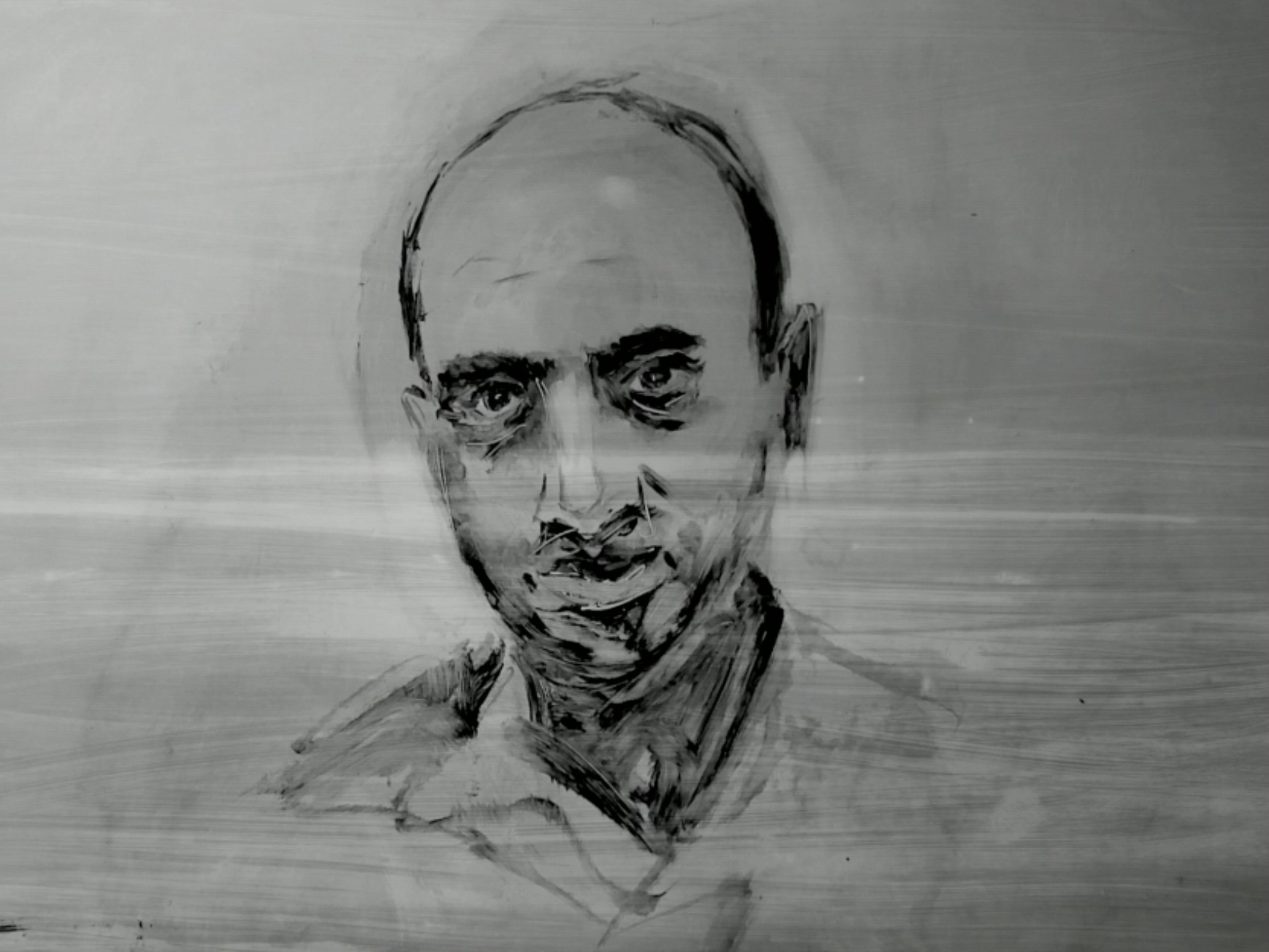
Getachew Bashir
Ethiopia
Known to everyone in Rochester as Gee-Gee, Getachew Bashir was a high court judge in Ethiopia before political pressure made his work impossible. He came to the U.S. and rebuilt his life from a hotel room-service job. He now manages refugee resettlement at Catholic Charities Family and Community Services — and frames the bureaucratic refugee system from the inside.
“When I see them, I just see them like someone like me. This is, all of us at some point.”
- 01
The Judge
Getachew studied law in Ethiopia and served as a high court judge. The court began handling politically charged cases — and instructions came down with them.
“I went to a law school in Ethiopia and have my law degree — Bachelor of Law degree. Worked as a high court judge.”
“While working in the court as a high court judge, we used to see politically charged cases. And there was intervention from the administration: what to do or not to do.”
“You cannot just say, “I stay independent.” That wasn't an option. Either you take orders or you don't. I just couldn't live and work in that kind of environment.”
- 02
How the System Actually Works
Gee-Gee's voice opens the work as a primer on the bureaucracy of refugee status — the camp, the screening, the years of waiting before a single resettlement plane ever lifts off.
“The main difference between refugees and other immigrants is the choice they make. Refugees didn't make a choice to leave their countries.”
“In the camp there is no running water. There is no educational facility. There is no medical facility. A camp is designed for a temporary shelter. That is deliberate.”
“They spend many, many years in the camp. Some refugees who come here, they spent 20 years in the camp.”
“The Homeland Security gets involved, the FBI gets involved, the Department of Defense… On average it takes about two years to get screened.”
- 03
Starting Over
Arrival in the U.S. is not the end of the journey. For Getachew it meant taking any work he could find while keeping his past to himself.
“When I came here as an immigrant, I had to take any job that I can find. So, I was working as a store assistant — not even a cashier. I had worked as a room server in a hotel.”
“It wasn't easy just from being a high court judge then to come here and mop the floor. That wasn't easy.”
“At first, I didn't share my background story because people, I thought, they wouldn't believe me. So, I didn't share for some time who I was.”
“You just feel extremely lonely here.”
- 04
The Iraqi Family
One memory he returns to: an Iraqi statistician whose family was about to be evicted with nowhere to go.
“There was an Iraqi family that I work with. The father was a statistician back in Iraq… But here, there is no help to go to school. If you are able-bodied you have to work.”
“When your hands are tied, but you see these people just need help and there is no one… no family, no community, no government. Just good family getting evicted.”
“We just talked to public assistance. And they agreed to pay the rent… I cannot forget the scream of his wife. I didn't do that much. She was talking in Arabic. And I knew it was just a praise and some kind of prayer… The excitement and the joy.”
- 05
Home
What he misses now is harder to name — the people who would have shown up for the small things.
“Now what I miss is just… no one is around. When something personal happens, no one is coming. We go to the hospital, have the baby. And no one is waiting, no one is cooking for my wife, and… it is just… no one around.”
“Home for me is a place where my wife and children feel free, feel safe.”
“There is no small help in refugee resettlement. All… all any kind of help is a big deal. How to ride a bus, where to stand, how to pay, how to ask for a stop. This is all of us at some point. We got help. All of us. No one just was born and just did everything by his own or her own.”
Where Getachew is now
Getachew is a refugee resettlement program manager at Catholic Charities Family and Community Services in Rochester, NY. He decides which incoming cases the office will accept, and walks new arrivals through the everyday infrastructure of a country they've never seen.
Support Catholic Charities Family and Community Services