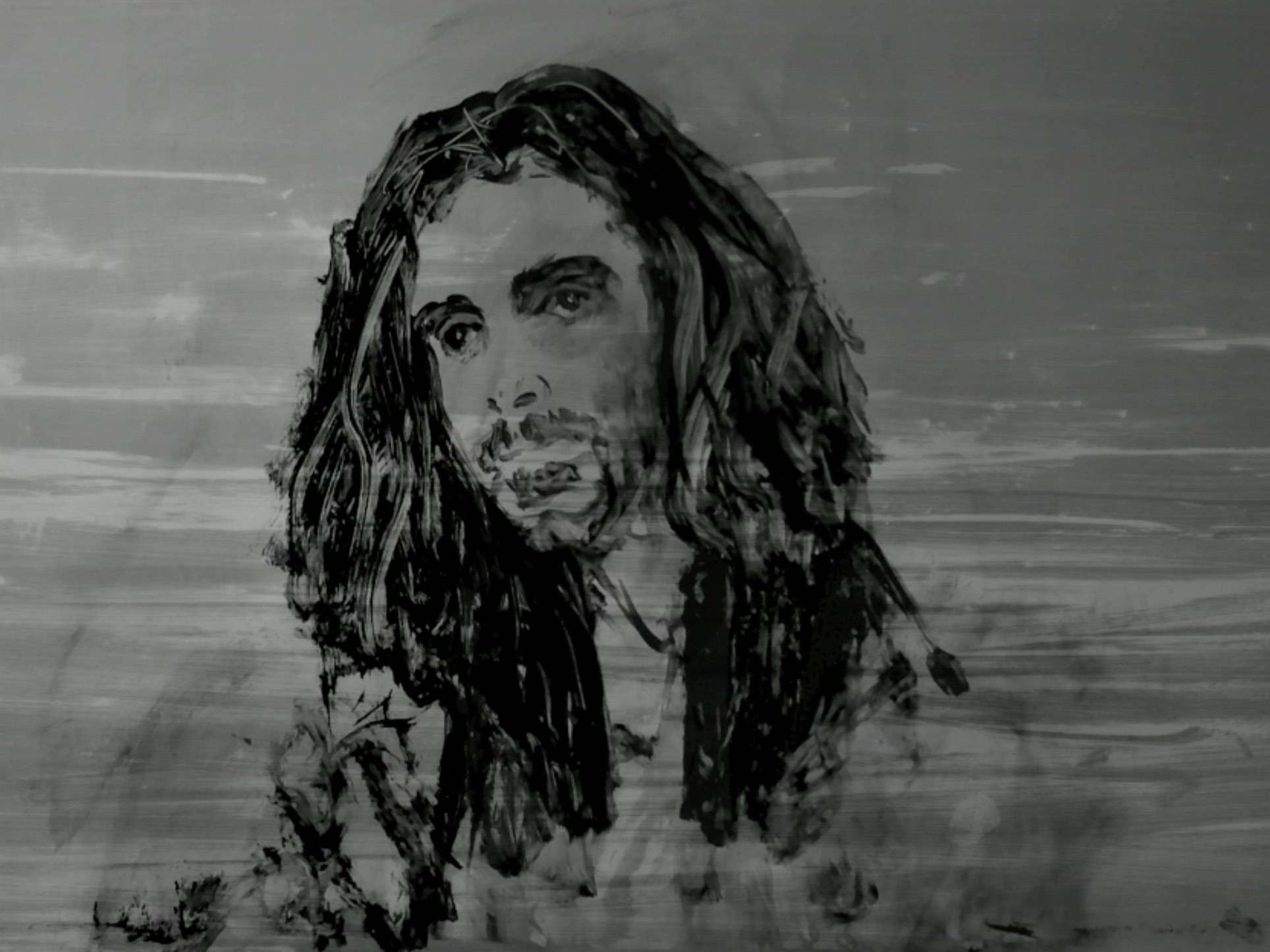
Milad Yousufi
Kabul, Afghanistan
Born June 6, 1994 — during the civil war
Milad Yousufi is the spine of Paper Pianos. As a child in Kabul, he taught himself to play piano in silence by drawing the keys on paper — the gesture that gives the work its name. He survived a suicide bombing inside a Kabul concert hall, fled to New York, and continues to compose and perform here.
“I used to draw that and then play and imagine the sound in my mind there. I could never think that one day I would be able to play on a real piano.”
- 01
Black and White
Under Taliban rule, music was forbidden. Milad practiced piano on paper because the sound of a real instrument could get him killed.
“I was in love with the piano's keys. Black and white, black and white. It's quite similar to my life.”
“I used to paint pianos there on the paper. Two black keys and three blacks. With the ruler I made something similar to the piano keys. And I knew that this side could sound very high… and the other side could sound very low.”
“Music was completely forbidden during the Taliban period. They say, “Music is forbidden in Islam. Someone who plays music is like non-Muslims… and you know we have to kill non-Muslims.””
- 02
Bullets in the Yard
His childhood took place inside a war. Friends were killed. Mines and live rounds were the only toys at hand.
“There were lots of bullets in our yard, because when the Taliban had been fighting, some of the bullets would come into our yard, so we had been playing with those bullets.”
“We used to play with mines. We didn't know what they looked like. Most of the mines, if you see it, looks something like a plaything — a doll, something… or a pen. My mom was always telling me, “It could explode at any time, so you have to be careful,” but we didn't have anything else to play with.”
“In the morning I've been playing with a friend. And by night I've heard like he died because the Taliban have been fighting and a bullet cut his head off. It was hard for me to believe at the time, like, how it's possible to play with a friend in the morning and afternoon you realize that you lose it?”
- 03
The Buried Piano
After the Taliban first fell, a family unburied a piano they had hidden under the ground. Milad convinced his father to buy what was left of it.
“It was under the rain and snow and sand for two years and there's a lot of things that were broken… The piano was like 60 percent destroyed.”
“It was a dream come true. I couldn't sleep. I've been practicing all the time. I've been cleaning my piano, and I've been sleeping under the piano.”
“But at the end of this story, I sold it because of my mother… I could notice the sort of sadness in my mother's face when guests were coming and we didn't have any TV. And I sold it for a few hundreds. And then we bought a TV.”
- 04
The Concert Hall
In 2014, Milad sat in the audience at the French Cultural Center in Kabul, watching his students perform. The play onstage depicted a suicide bomber. A real bomber detonated himself in the audience.
“And then on the same time: an actual — a real explosion. At the same time, it happened. The actual suicide bomber exploded himself. In the concert hall.”
“When the lights come on again, they see it… like there was blood on the floor and parts of human body: the hands, the feets… You can smell only some gunpowder… and dust… and sometimes blood and… smells like death.”
“You sort of feel that it's the last day you have. That's it. This pretty much it. You are done.”
“I wanted to be with my mother — support her — but she wanted me to survive somehow rather than staying in Afghanistan and get killed in an explosion.”
- 05
An Open Fist
Milad now lives in New York. The safety is real, and so is what it costs to be here without his family.
“Most of the day when I wake up, and then I cry for no reason.”
“I'm safe, that's a good thing. It's a hope for me one day I'll be able to invite my family. But 'til then, every day — sort of every single moment — I'm dying inside of myself.”
“If we close our heart like a fist, it will be closed completely; if you open it, you might find something interesting.”
Where Milad is now
Milad lives and works as a pianist and composer in New York. His story — the paper piano, the buried instrument, the open fist — gives Paper Pianos its name and its emotional through-line.